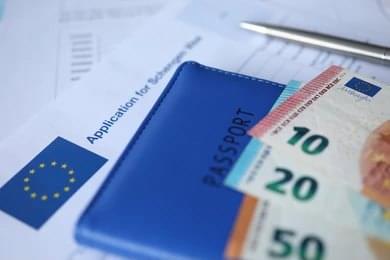
Schengen visa self-application works if you fully understand embassy rules, while visa assistance is better if you want accuracy, compliance, and lower risk of refusal. The choice depends on your documentation strength, travel history, and familiarity with Schengen consular requirements.
The debate around visa assistance vs self apply exists because both methods must strictly follow the Schengen Agreements and the EU Regulation (EC) No. 810/2009. While self-application gives applicants full control, many refusals happen due to technical errors—incorrect visa category, weak cover letters, financial mismatches, or non-compliant travel insurance. According to the European Commission, the global Schengen visa refusal rate stood at 14.8% in 2024, highlighting how small mistakes can have big consequences.
These risks are mitigated by visa assistance services, which ensure accuracy, contribute to overall credibility, and align applications with embassy-specific standards.
What is a Schengen Visa Self-Application? Step-by-Step Official Process (2026 Guide)
You are required to independently complete all steps in the self-application visa process. From start to end, you have to prepare and submit your Schengen visa application without any help from any travel agents or third-party service providers. In this process, you are required to check the following on your own:
- The correct embassy/consulate
- Book your appointments.
- Submit all forms and gather all required documents
- Moreover, you need to attend the visa centre interview
Step-by-Step Process to Self-Apply for a Schengen Visa
Here, you get a detailed brief of how you can apply for a Schengen visa alone. So you can go through this process carefully.
Step 1: Determine Your Visa Type & Eligibility
The legal foundation for selecting and issuing a Schengen visa is primarily governed by Regulation (EC) No 810/2009, better known as the Schengen Visa Code. Here is a short and simple table of Schengen Visa types for you to choose from as per your requirement.
| Visa Type | Official Name | Purpose of Visa | Maximum Stay Allowed | Where It Is Valid | Who Should Apply |
| Type A | Airport Transit Visa | This type of visa permits you to wait in the international transit area of a Schengen airport. | No stay permitted (must remain in the transit zone). | Only the international transit zone of the airport. | Travellers who are travelling from a non-Schengen country to another and have a layover in Schengen are eligible. |
| Type C | Short-Stay Schengen Visa | Tourism, business trips, visiting family/friends, or short medical treatments. | The visa is valid for up to 90 days within 180 days. | All Schengen countries (Uniform Schengen Visa). | This visa applies to tourists, business travellers, or anyone visiting for less than 3 months. |
| Type D | National Long-Stay Visa | Employment, university studies, research, or long-term residency. | The duration of the visa is typically more than 90 days, with the possibility of renewal for an additional year. | Primarily, the issuing country allows travel to other Schengen states for 90 days. | Students, long-term workers, and family members relocating for residency are all eligible for this privilege. |
Step 2: Gather All Required Documents (Official Checklist)
When you start your Schengen visa self-application, you need to check the following documents:
- The passport should be valid for at least three months after the intended departure date from the Schengen Area, with at least two blank pages.
- Complete and sign your application form for a Schengen visa.
- Passport images that are biometric compliant.
- Travel medical insurance that covers at least €30,000 is available in all Schengen nations.
- Your cover letter should explain your trip objective and schedule.
- You should provide proof of accommodation, such as a hotel booking or an invitation letter.
- Provide proof of sufficient funds, such as bank statements or payslips.
Additional Documents (Case-Specific)
- Flight itinerary (return).
- Proof of employment/student status.
- If the trip is being financed by someone else, provide a sponsorship letter.
Embassies may ask for more documents and call you for interviews or clarification.
Step 3: Complete the Official Schengen Visa Application Form
You must accurately complete the harmonised Schengen visa application. You can usually complete the:
- Online (if offered by your destination country),
- Printable PDF,
- Alternatively, you can fill out the form by hand using black or blue ink.
These are mistakes you should avoid:
- Do not make any spelling mistakes.
- Missing signatures.
- If your supporting documents contradict the data, you may get a visa refusal.
Step 4: Schedule Your Visa Appointment
After all your documents are prepared, schedule your visa appointment at the embassy or consulate of the Schengen country you enter.
- Some Schengen countries have appointed BLS International as an official centre for applying for visas in certain areas. According to the list of official embassies, BLS usually handles Schengen visa requests for Spain, France, Hungary, Slovakia, and Malta.
- VFS Global handles Schengen visa applications for France, Italy, the Netherlands, Switzerland, Sweden, Denmark, Norway, Finland, Austria, Portugal, Belgium, and Greece (London & Manchester via VFS).
- However, not all Schengen countries rely on external visa service providers such as VFS Global or BLS International. In certain jurisdictions, you are required to submit your Schengen visa applications directly through the embassy or consulate. Countries that may follow direct submission, depending on the applicant’s location, include Germany, Austria (in some jurisdictions), Slovenia, Croatia, Malta, Luxembourg, Latvia, Lithuania, and Estonia.
- You should check the Schengen visa application process on the main destination country’s embassy or consulate website or the European Commission’s Migration and Home Affairs portal. These government sources state whether you should make it at the embassy or through VFS Global or BLS International.
The VFS and BLS International only gather applications, biometrics, and fees before sending them to the embassy; it does not make visa decisions.
Step 5: Attend Your Appointment & Submit Your Application
You will be required to physically visit the embassy or official visa application centre once your appointment has been scheduled.
- Visit the embassy or the official visa application centre in person.
- Provide a printed application, supporting documents, and photos.
- You must submit fingerprints and a digital photo unless exempted by prior biometric capture within 59 months.
- Pay the official visa cost (which is €45 for minors and €90 for adults for short stays). The Visa Application Centre may charge service fees.)
Step 6: Track Application & Wait for Decision
After the submission—
- The embassy/consulate will process your application.
- Schengen visa applications are normally processed within 15 calendar days. However, during peak travel seasons, high application volumes, or when additional document verification is required, processing time may extend up to 45–60 days, as permitted under Schengen regulations.
- You might be contacted for more details, so you should reply right away to prevent delays.
Step 7: Collect Your Passport & Visa
After approval of your Schengen visa—
- You’ll get a notification via SMS, email, or the visa centre’s management system.
- Then you need to acquire your passport with the visa sticker from the Visa Application Centre or opt for courier delivery (if offered).
- Furthermore, you ought to confirm all visa details (names, dates, and destinations) are exact before departing.
How can the Visa Assistance or Visa Consultancy help you?
If you are confused between Self-Application vs Visa Assistance, then you need to have a clear knowledge of what the Schengen Visa Agents or agencies’ roles are. So go through this section carefully, and it will help you to make your decision.
- Schengen Visa Assistance (or Visa Consulting) is a professional service where trained visa consultants help you prepare and submit visa applications according to official embassy requirements. The visa agent’s role is to review your documents, fill out forms, write a perfect cover letter, and plan an itinerary.
- According to the European Commission (Directorate-General for Migration and Home Affairs), across the EU and Schengen-affiliated countries received 11.7 million short-stay visa applications. This represents a notable 13.6% increase from the 10.3 million recorded in 2023. Of these applicants, approximately 9.7 million were successfully granted visas, signalling a robust recovery in global mobility.
- Moreover, they will give you appointment support at the official embassy and the VFS/BLS centres. However, the Schengen visa agency will ensure a smooth visa-obtaining procedure for first-time travellers or self-employed applicants, those with previous refusals, or complex travel histories.
- The main visa consultant benefits are that they help you to reduce documentation errors. They also help you understand the importance of presenting a clear travel intent.
- Furthermore, they can advise you on how to prepare proper financial proof that complies with embassy-specific guidelines.
How to Choose the Best Visa Assistance?
To get trusted visa assistance, you should check these points:
- If any visa agency tells you that you will surely have a Schengen visa, then it can be misleading. This is because the embassy is responsible for ensuring the validity of your visa application. Visa agencies can help you throughout the process, but they do not guarantee that you’ll have your visa.
- Try to find those agencies that have Google reviews and a transparent visa application process.
- However, you should check their Schengen visa cost and compare it with other agencies to get a clear view.
- Most importantly, find which visa agency educates you about the visa policies and does not make exaggerated claims.
Self-Application vs Visa Assistance for Schengen Visa
Here, you can get the overview of Self-Application vs Visa Assistance to help you decide which option is best for your travel needs.
| Aspect | Self-Application (DIY) | Visa Consultant Assistance |
| Who Handles the Process | You manage everything independently. | A professional guide manages the preparation. |
| Appointment Booking | You must monitor VFS/BLS portals for slots yourself. | Guidance on booking; some offer “premium” slot assistance. |
| Document Preparation | You prepare all letters and organize files. | Professionals review, edit, and structure your file. |
| Knowledge Required | High – You must research current 2026 EES/embassy rules. | Moderate – The consultant provides the updated guidance. |
| Cost | Lower – Only official visa fees (approx. €90) and service fees. | Higher – Includes visa fees + consultant service charges. |
| Error Risk | Higher – Small mismatches can lead to digital “flags”. | Lower – Experts catch inconsistencies before submission. |
| Control & Transparency | Full – You see every detail of your application. | Shared – You rely on the consultant’s accuracy and honesty. |
| Best for Simple Profiles | Frequent travellers with a clean history and stable jobs. | Ideal for beginners, students, and repeat refusers. |
| Time Efficiency | Low – Requires hours of research and document drafting. | High – Guided process saves significant manual effort. |
| Stress Level | Can be high, especially during peak seasons. | Low – The process is under professional surveillance. |
Final Words
So, at the end of our discussion, we may conclude that if you’re a first-time applicant and got a refusal, then you can take visa assistance and prepare your application according to embassy guidelines. However, if you have time and explore the visa application process alone or have a clear travel history, then you can apply for a visa alone.
If you’re looking for clear, reliable support with visa appointment scheduling, you can take help from Schengen Travel Agency. With over ten years of experience and offices in the UAE, UK, Saudi Arabia, the Philippines, Kazakhstan, Oman, and Qatar, we make it simple to get a visa for Schengen, the UAE, and other countries. We focus on clear guidance and consistent assistance to make travel preparation easier for both individuals and businesses—so you can plan your trip with confidence.
FAQs
Q.1 Is self-application better than visa assistance for a Schengen visa?
A. If your profile is simple and you have all the legit documents in your hand, then you may go for a Schengen visa self-application. But if you have a complicated travel history and are short on time and also need a stress-free visa application process, then you can choose visa assistance.
Q.2 Can visa assistance prevent Schengen visa rejection?
A. No. Visa assistance cannot prevent rejection or guarantee approval. The visa assistance can reduce errors and improve document clarity, and prepare all the necessary procedures as per embassy rules.
Q.3 Are visa consultants legal for Schengen visas?
A. Yes. Visa consultants are legal. They follow official embassy and Schengen guidelines. However, these visa assistance acs as facilitators; they do not influence visa decisions.
Q.4 Is visa assistance worth paying for?
A. If you have a problematic profile, a history of rejections, or time restrictions, then visa assistance may be worth considering. Visa assistance could be a viable option for you. In this case, self-application may not give the adequate support you require.