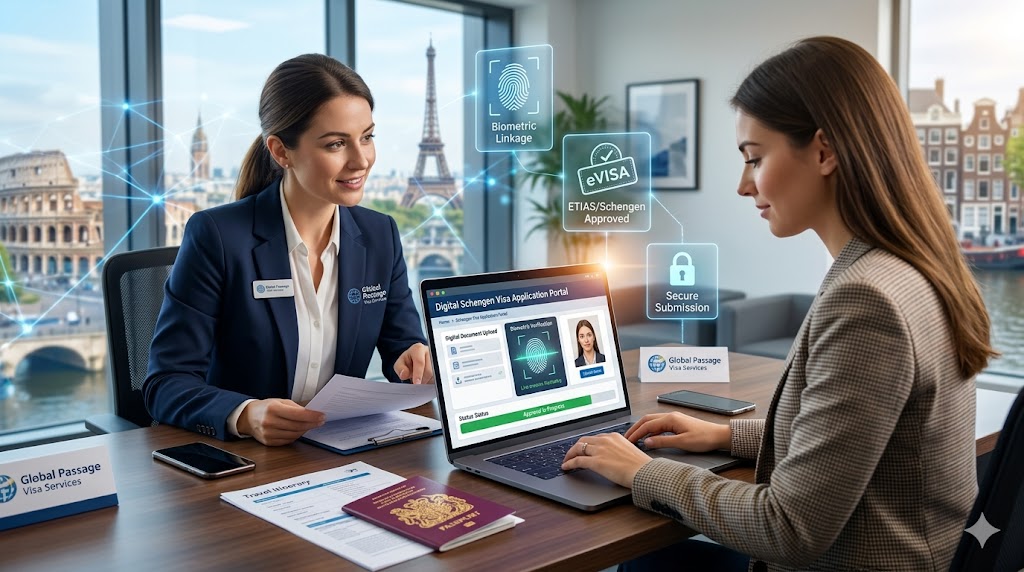
The digital Schengen visa is coming in late 2026. Find out what Schengen visa digitalisation means for UK-based applicants, how the new Schengen visa system works, and how to prepare your Schengen visa online application today.
The way travellers apply for European short-stay visas is set to change significantly. The digital Schengen visa is a fully electronic visa replacing the traditional physical sticker, which is entering a limited pilot phase in 2026, with a wide rollout expected in 2027-2028. For UK-based applicants, understanding these Schengen visa changes 2026 is essential before you book your next European trip.
What Is the Digital Schengen Visa?
The digital Schengen visa is an electronic travel authorisation that replaces the physical visa sticker currently affixed to passports. The visa data will be stored digitally and linked to your travel document, avoiding the need for physical labels and streamlining border checks across all 29 Schengen member states under the new Schengen visa system.
This change is part of a wider Schengen visa digitalisation strategy led by the European Commission, which also covers the Entry/Exit system (EES). It’s fully operational from April 2026, and the upcoming ETIAS authorisation for visa-exempt travellers.
When Will the Digital Schengen Visa Start?
A limited country pilot for the digital Schengen visa online application process is expected to start in late 2026, with full implementation anticipated between 2027 and 2028. The European Commission has confirmed this phased timeline as part of its 2026 State of Schengen report, which sets out digitisation as a core border management priority.
The Schengen visa online application process will not be totally digital immediately. The current system involves in-person appointments and biometric enrolment. But one thing is certain: Schengen visas will become fully online in the not-too-distant future.
Will UK Residents Need a Digital Schengen Visa?
It depends on your nationality, and not on your UK residency status.
British passport holders do not currently need a Schengen visa for short stays of up to 90 days within any 180 days. But they will need to obtain ETIAS authorisation once it launches in late 2026. ETIAS is not a visa–it’s a separate, digital pre-travel authorisation which applies only to visa-exempt nationals.
Non-EU nationals residing in the UK, including holders of a Skilled Worker visa, Student visa, or Indefinite Leave to Remain. It must continue to apply for a full Schengen visa regardless of UK immigration status. For this group, the digital Schengen visa for UK residents will be the biggest change when it rolls out, removing the requirement for multiple in-person centre visits, potentially.
We regularly assist UK-based applicants for a digital Schengen visa and we’ll be ready to guide clients through the digital transition.
How Will the EU Digital Visa Application Process Work?
While the full technical specifications are still being finalised, the EU digital visa application process is expected to work broadly as follows:
- Online submission of personal details, travel plans, and supporting documents via a centralised EU portal.
- Remote biometric verification for first-time applicants, though in-person biometric enrolment may still be required initially
- Digital visa issuance is linked directly to the applicant’s passport, verifiable at borders without a physical sticker.
- Reuse of biometric data stored in the Visa Information System (VIS) for repeat travellers who’ve applied within the past five years.
The Schengen visa online application portal is expected to be familiar to anyone who’s applied before, as it feels like different websites, different rules, different centres. The new portal is meant to change all of that.
What Schengen Visa Changes Should UK Applicants Prepare for Now?
Before the digital Schengen visa fully launches, there are important Schengen visa changes for UK travellers in 2026 already in effect:
- Live EES: The Entry/Exit system is fully operational from April 2026. Biometric data is now captured at Schengen external borders. This replaces the old passport system.
- No more BRP cards: UK-based applicants must now provide a Share Code to verify their digital eVisa status when attending visa appointments.
- Multi-entry visas are more accessible: Clean history travellers are increasingly being granted longer-validity multi-entry visas.
- ETIAS launches late 2026: British passport holders travelling visa-free must register for ETIAS before departure once it goes live.
You can read more about how to apply for a Schengen visa from the UK on our dedicated guide page.
Can UK Citizens Apply Online for a Schengen Visa Right Now?
Not fully. Many consulates now accept online appointment bookings, and some allow document uploads in advance. The process of Schengen visa online application still requires in-person attendance for biometric enrolment for first-time applicants. The digital Schengen visa pilot in late 2026 may start to change this for applicants in participating countries.
Your consulate may waive the requirement to attend in person if you have enrolled on biometrics in the VIS within the last five years.
FAQs–Digital Schengen Visa Coming Late 2026—What It Means for UK-Based Applications
Q1. What is the digital Schengen visa?
The digital Schengen visa is an electronic visa which replaces the physical sticker in your passport. All of your visa data is stored digitally and linked to your document, making your border crossings faster.
Q2. When will the digital Schengen visa start?
A limited pilot is expected in late 2026, with full rollout anticipated between 2027 and 2028.
Q3. Do UK residents need a digital Schengen visa?
It is based on your passport. British passport holders will need ETIAS (not a visa) once it launches. Non-EU nationals living in the UK will need a full digital Schengen visa for UK residents once the system is live.
Q4. Can UK citizens apply online for a Schengen visa now?
Not fully. Online appointment booking is possible, but biometric enrolment still needs an in-person visit for most applicants. But this is expected to change progressively when the new Schengen visa system rolls out.
Q5. Will the visa fee change with digitalisation?
No fee increase has been announced as part of the digitalisation process.
Start and apply for your Schengen visa as we handle the complexity so you can focus on your trip. Our team of experienced advisers supports UK-based applicants of all nationalities, from document preparation to appointment booking.